Do you wear long sleeves, sunscreen, and sunglasses to protect yourself from the sun? Despite the highly publicized hazards of sunlight exposure, using sunlight as a healing therapy dates back to ancient civilizations in Egypt, Greece, and Rome, when individuals would sunbathe to heal certain conditions.
Today, the sun is not the only source for healing light. Targeted light therapies, such as low-level laser therapy (LLLT), actually amplify the healing potential of light—without the risk of sunburn or skin cancer—to treat a variety of conditions.
Low-Level Laser Therapy Overview
The lasers used in LLLT are typically small (often handheld) units, and unlike surgical and aesthetic lasers, do not heat the targeted tissue. Instead, LLLT emits low levels of light that are absorbed by your mitochondria (the energy-producing organelles in many of your cells), which then can increase cellular energy production and ultimately help heal surrounding tissue. This process is comparable to plant photosynthesis, during which sunlight is absorbed by plants and converted to energy for the plants to grow.
Healing Benefits of LLLT
Low-level laser therapy may sometimes provide an effective alternative to surgery or medications—without accompanying side effects. It can help regenerate tissue, reduce inflammation, decrease pain, and increase immunity, and research has shown its efficacy in treating many conditions, including:
There are no known side effects of LLLT when used properly. User guidelines include:
Never receive LLLT over your thyroid—LLLT can compromise thyroid function.
Wear protective eyeglasses during LLLT—looking directly at the light can damage your retinas.
Do not receive LLLT if you are pregnant—the laser’s effects on a fetus are unknown.
Do not laser potentially cancerous lesions—LLLT can stimulate proliferation of existing cancer cells.
It typically takes a series of LLLT sessions to produce results. Unfortunately, many insurance providers do not cover LLLT at this time.
How to Find Low-Level Laser Therapy
Many massage therapists, acupuncturists, chiropractors, physical therapists, and other health care professionals use LLLT in their healing practices, and it may be easiest to find them in your area by asking your physician for a referral or searching online. The World Association for Laser Therapy sponsors Find a Laser Therapist to help you find a laser therapist in your area; however, know that the current therapist list is short.
Many companies now manufacture and sell low-level lasers to the general public; however, quality lasers can be quite pricey, ranging up to $25,000 or more, and there are many complex options to choose from. To provide an alternative to purchasing a laser for home use, some therapists rent their lasers to clients.
The use of low level laser to reduce pain, inflammation and edema, to promote wound, deeper tissues and nerves healing, and to prevent tissue damage has been known for almost forty years since the invention of lasers. This review will cover some of the proposed cellular mechanisms responsible for the effect of visible light on mammalian cells, including cytochrome c oxidase (with absorption peaks in the Near Infrared (NIR)). Mitochondria are thought to be a likely site for the initial effects of light, leading to increased ATP production, modulation of reactive oxygen species, and induction of transcription factors. These effects in turn lead to increased cell proliferation and migration (particularly by fibroblasts). https://www.ncbi.nlm.nih.gov/pubmed/25653800 Read more
Low-level laser (light) therapy (LLLT) is a fast-growing technology used to treat a multitude of conditions that require stimulation of healing, relief of pain and inflammation, and restoration of function. Although the skin is the organ that is naturally exposed to light more than any other organ, it still responds well to red and near-infrared wavelengths. The photons are absorbed by mitochondrial chromophores in skin cells. Consequently electron transport, adenosine triphosphate (ATP) nitric oxide release, blood flow, reactive oxygen species increase and diverse signaling pathways get activated. Stem cells can be activated allowing increased tissue repair and healing. In dermatology, LLLT has beneficial effects on wrinkles, acne scars, hypertrophic scars, and healing of burns. LLLT can reduce UV damage both as a treatment and as a prophylaxis. In pigmentary disorders such as vitiligo, LLLT can increase pigmentation by stimulating melanocyte proliferation and reduce depigmentation by inhibiting autoimmunity. Inflammatory diseases such as psoriasis and acne can also benefit. The non-invasive nature and almost complete absence of side-effects encourages further testing in dermatology. https://www.ncbi.nlm.nih.gov/pmc/articles/PMC4126803/ Read more
This year marks the 50th anniversary of the discovery of the laser. The development of lasers for medical use, which became known as low-level laser therapy (LLLT) or photobiomodulation, followed in 1967. In recent years, LLLT has become an increasingly mainstream modality, especially in the areas of physical medicine and rehabilitation. At first used mainly for wound healing and pain relief, the medical applications of LLLT have broadened to include diseases such as stroke, myocardial infarction, and degenerative or traumatic brain disorders. This review will cover the mechanisms of LLLT that operate both on a cellular and a tissue level. Mitochondria are thought to be the principal photoreceptors, and increased adenosine triphosphate, reactive oxygen species, intracellular calcium, and release of nitric oxide are the initial events. Activation of transcription factors then leads to expression of many protective, anti-apoptotic, anti-oxidant, and pro-proliferation gene products. Animal studies and human clinical trials of LLLT for indications with relevance to neurology, such as stroke, traumatic brain injury, degenerative brain disease, spinal cord injury, and peripheral nerve regeneration, will be covered. https://www.ncbi.nlm.nih.gov/pmc/articles/PMC3065857/ Read more
Low Level Laser Therapy (LLLT) has a photochemical effect (like photosynthesis in plants). One of the main mechanisms of action occurs in the mitochondria (the cellular power plant inside every cell). The effect depend on the application of the correct wavelength and density of light, delivered to the target tissues for an appropriate period of time (typically between 30 - 60 seconds). Pulses can improve tissue repair and anti-inflammatory effect, analgesia is best achieved with a continuous beam.
TISSUE REPAIR AND ANTI-INFLAMMATORY EFFECTS
The primary effect occurs when light is absorbed in cytochrome c oxidase a protein within the mitochondria.
When cells get stressed (perhaps due to disease, injury or ageing) the mitochondria produces nitric oxide (NO). This competitively displaces oxygen from cytochrome c oxidase consequently reducing ATP (an essential intracellular cellular energy and extracellular signalling molecule) and causing an over production reactive oxygen species (ROS) and leading to oxidative stress. Oxidative stress is well known to lead to inflammation an cell death via the gene transcription factor NF-Kb.
Low Level Laser Therapy (LLLT) of the correct wavelength and density, dissociates NO allowing oxygen back in, so ATP is restored and oxidative stress reduced. Once normal mitochondrial function is restored by LLLT then cell metabolism is improves, and the patient gets better more quickly.
Low-level laser therapy (LLLT) refers to the use of a red-beam or near-infrared laser with a wave-length between 600 and 1000 nanometers and power from 5 to 500 milliwatts. Depending on wavelength, tissues absorb energy to produce heat. LLLT lasers transfer small or very small amounts of energy into the skin. In contrast, lasers used in ablative surgery typically use 300 watts and burn the tissues they encounter. LLLT is also referred to as cold laser therapy, low-power laser therapy (LPLT), low-intensity laser, low-energy laser therapy, and monochromatic infrared light energy (MIRE) therapy. When administered to so-called "acupuncture points," the procedure may be called "laser acupuncture." The providers include physicians, chiropractors, physical therapists, and occupational therapists, but devices are also marketed for long-term use at home. The use of LLLT was initiated in the 1960s by a Hungarian physician named Endre Mester. The devices have been advocated for use in wound healing; smoking cessation; tuberculosis; temporomandibular joint (TMJ) disorders; and musculoskeletal conditions such as carpal tunnel syndrome, fibromyalgia, osteoarthritis, and rheumatoid arthritis. The recommended dosage, number of treatments, and length of treatment vary from one device to another. The U.S. Food and Drug Administration classifies most LLLT devices as Class II devices as “lamp, non-heating, for adjunctive use in pain therapy” (product code NHN). Between 2002 and 2016, 44 such devices received 510(k) clearance for marketing for temporary pain relief: Acculaser Pro Low Level Laser Therapy Device; Acculaser Pro4; Axiom Biolaser LLLT Series-1; Axiom Biolaser LLLT Series-3; Bioptron Pro Light Therapy System and Bioptron Compact III Light Therapy System; Collagentex Rx-1; Diobeam 830; Elite Electromed L.I.T.E. 4/1; Erchonia's Allay, Emerge, EML Laser, EML Laser; Evri, Mis-Ac Derma Scanner, Pl2000, Pi5000, Pi Touch, and TH1 Laser; Excalibur IV Light Therapy System Model SGEX4-001; Excalibur Light Therapy System Model SGLEX-04-001; GRT Lite Model 8-A; Lapex 2000; Laser Helmet, Lasertouchone; Lazrpulsr 4x; Ld-I 75 And LD-I 200; LEP2000 Therapy System; Lightstream Low Level Laser; Luminex LL Laser System; Lx-100 Hair Growth Stimulation System; Medx LCS Laser Series; Microlight 830 Laser System; NMA 1052 Console System With NMA 100 Laser Accessory; Omega Excel/XP Laser System; Power Laser 90; QLaser System; Quantum Light Therapy System; Sunetics Clinical Bio-Stimulation Laser; Theralase TLC-2000 Therapeutic Medical Laser System; Thor DDII 830CL3 Laser System; Tlc-2000 Therapeutic Medical Laser System; and Trilumina Therapeutic Laser System. Most of the clearances were for symptoms related to wrist pain due to carpal tunnel syndrome, but a few mentioned temporary relief of muscle stiffness, minor arthritis pain, and/or temporary increase in local blood circulation. The FDA has also cleared one device, the LTU-904 Portable Laser Therapy Unit as "light, lymphedema reduction, low energy" (product code NZY). Government Enforcement Actions The most aggressively promoted LLLT product appears to be the Anodyne Therapy System, which has professional and home versions. It is marketed by Anodyne Systems, LLC, of Tampa, Florida, which also has operated as Restoration Health. It is marketed for LLLT even though the FDA classifies it as an infrared heat lamp (product code LDY). The FDA cleared it (under the name Spectropad) in 1994 for "relief of minor muscle and joint pain and improvement of superficial circulation." However, for several years, the company's Web site suggested that it could do more. In 2005, after conducting an inspection, the FDA sent the company a warning letter stating:
Our inspection determined that your product labeling and internet website promote the Anodyne Therapy System for use in the treatment of wounds and ulcers, loss of protective sensation, gait and balance impairment, and other Diabetic Peripheral Neuropathy conditions, as well as conditions associated with Non-diabetic Neuropathies. Your company is also promoting the Anodyne Therapy System for the treatment of conditions including, but not limited to, soft tissue injuries, Carpal Tunnel Syndrome (CTS), and lymphedema. According to our records, however, you do not have marketing clearance from FDA to distribute into interstate commerce the Anodyne Therapy System for these uses. . . . . Because you do not have marketing clearance from the FDA for these new intended uses, marketing the Anodyne Therapy System with these claims is a violation of the law [2].
In 2015, Anodyne's Web site stated that its device was prescribed by more than 11,000 physicians and had been the subject of 19 published studies [1]. Studies also exist for a few other devices. The scientific consensus is that no LLLT has been proven more effective for pain than standard forms of heat delivery. Some benefits have been reported, but the studies have been too small and/or too short to draw firm conclusions. The best-designed study of diabetic patients with sensory nerve impairment of the feet found that 90 days of Anodyne therapy at home brought about no more improvement in peripheral sensation, balance, pain, or quality of life than sham therapy [3]. One FDA-cleared LLLT device—the QLaser—has been promoted with curative claims that resulted in civil and criminal prosecution. The primary marketer, Robert L. Lytle (better known as Dr. Larry Lytle), had begun manufacturing and distributing low-level laser devices in 1997, shortly before the South Dakota Board of Dentistry had revoked his dental license for fraud and substandard patient care. In 2014, a federal complaint charged that Lytle, doing business as QLasers PMA and 2035 PMA, had marketed a dozen devices with illegal claims that they could treat "over 200 different diseases and disorders," including cancer, cardiac arrest, deafness, diabetes, HIV/AIDS, macular degeneration, and venereal disease. However, court documents indicate that although the FDA obtained a permanent injunction [4], Lytle continued selling the devices to and through other distributors. In January 2017, he and three distributors were charged with conspiracy in connection with the sale of QLaser devices and one of the three pleaded guilty [5,6].
Insurance Company Critiques
Aetna, CIGNA, and the Center for Medicare and Medicaid Services (CMS), have published detailed critiques of Anodyne's data and other published studies and explain why they do not cover LLLT.
Aetna considers treatment with low-level infrared light (infrared therapy, Anodyne Therapy System) experimental and investigational for the treatment of acne, back (lumbar and thoracic) pain, Bell's palsy, central nervous system injuries, chronic non-healing wounds, diabetic peripheral neuropathy, ischemic stroke, lymphedema, neck pain, osteoarthritis, Parkinson's disease, retinal degeneration, and stroke because of a lack of adequate evidence in the peer-reviewed published medical literature regarding the effectiveness of infrared therapy for these indications [7].
CIGNA concludes: Low-level laser therapy (LLLT) has been proposed for a wide variety of uses, including wound healing, tuberculosis, and musculoskeletal conditions such as osteoarthritis, rheumatoid arthritis, fibromyalgia and carpal tunnel syndrome. There is insufficient evidence in the published, peer-reviewed scientific literature to demonstrate that LLLT is effective for these conditions or other medical conditions. Large, well-designed clinical trials are needed to demonstrate the effectiveness of LLLT for the proposed conditions [8].
CMS has determined that there is sufficient evidence to conclude that the use of infrared devices is not reasonable and necessary for treatment of Medicare beneficiaries for diabetic and non-diabetic peripheral sensory neuropathy, wounds and ulcers, and similar related conditions, including symptoms such as pain arising from these conditions. Therefore, we are issuing the following National Coverage Determination. The use of infrared and/or near-infrared light and/or heat, including monochromatic infrared energy (MIRE), is not covered for the treatment, including symptoms such as pain arising from these conditions, of diabetic and/or non-diabetic peripheral sensory neuropathy, wounds and/or ulcers of skin and/or subcutaneous tissues in Medicare beneficiaries [9].
A few other insurance companies have published brief statements with the same conclusion.
The Bottom Line
At this writing, the bottom line appears to be that LLLT devices may bring about temporary relief of some types of pain, but there's no reason to believe that they will influence the course of any ailment or are more effective than standard forms of heat delivery. Read more
Low-level laser therapy (LLLT) is a form of alternative medicine that applies low-level (low-power) lasers or light-emitting diodes (LEDs) to the surface or orifices of the body. Whereas "high-power" lasers are used in laser medicine to cut or destroy tissue, low-power lasers are claimed to relieve pain or to stimulate and enhance cell function.
The effects of LLLT appear to be limited to a specified set of wavelengths of laser,[1] and administering LLLT below the dose range does not appear to be effective.[2]
“LLLT supplies the brain with metabolic energy in a way analogous to the conversion of nutrients into metabolic energy, but with light instead of nutrients providing the source for ATP-based metabolic energy.” (R)
LLLT is The Best Cognitive Enhancer Around. (notice the period)
Whether you’re healthy or not, Low-Level Laser Therapy or LLLT is probably the single most effective tool for cognitive enhancement
The studies cited in this article are based on LLLT usage in various parts of the body, but LLLT works very similarly no matter where it’s pointed. I’ve come across many studies that talk about the same mechanism’s no matter which cells/tissues are involved.
The studies are all over the map here when it comes to quality. The point is it’s safe and reason to experiment with and see if it works for you. This post isn’t meant to prove anything, as none of my posts are. They are to give you some food for thought.
What Devices I Use
The best device I use for whole body infrared therapy is the Joov light. The combo (660/850) is the best one. Use the discount code SELFHACKED to receive $25 off each device.
I also use Vielight devices, which are can reach in deeper in the brain. I bought these Vielight devices and they are better than the cheaper ones. The Vielight Neuro is pretty good for brain function, and I like using it. If you have too much hair, it might be a problem.
Use discount coupon code JOSEPHCOHEN for 10% off all Vielight products. Vielights are better than the cheaper ones.
What LLLT is Used For In The Scientific Literature
There are too many studies to list all of them, so I just referenced the ones I found first. So while maybe dozens of studies demonstrate a reduction of inflammation, I just referenced the ones I found first.
In general, lowering inflammation where ever applied (R, R2). Specifically, by reducing levels of PGE(2), Cox 2, IL-1b, TNF, neutrophil cell influx and oxidative stress (R)
Cancer: Various tumors, when used with a photosensitizer (R)
Type 1 and type 2 diabetes (R, R2/R2) “It should be well noted that the common thought, that it is impossible for the pancreas to restore its function and morphology in case of diabetes mellitus, has definitely come to an end in the history of this disease and mankind…….Secondly, it has been ascertained from this study that the quantum energy of laser rays is capable of stimulating and causing the regeneration of pancreatic tissues, including the B-cells of the Islets of Langerhans, even in advanced disease states.” I can’t find these studies in any journal, but it’s quite intriguing. Skepticism is always advised, although I don’t see the harm in trying it on the pancreas.
Based on the mechanism’s involved I’d expect it to help for cognitive-based disorders like Autism,Schizophrenia, and Bipolar disorders. Autism, for example, is in part a result of mitochondrial dysfunction (R) and inflammation (R). Deficiencies in the cells’ ability to fuel brain neurons might lead to some of the cognitive impairments associated with autism and higher levels of free radicals also might contribute to autism severity (R). Mitochondrial abnormalities also occur in bipolar and schizophrenia (R), as well as inflammation (R, R2)
It should also help with inflammatory gut problems like Crohn’s and Colitis.
Biological Mechanisms: How Laser Therapy Enhances Cognitive Function
LLLT works by hormesis and invoking your body’s stress response, specifically nitric oxide/free radicals. Therefore, like any kind of hormetic tool, use it wisely and prudently.
LLLT increases free radicals (ROS), but the level of ROS produced by LLLT in normal cells are beneficial (R).
I mainly use LLLT on my brain, but I also use it for many other things. For this section, I speak about its mechanism with regard to the brain.
Decreases free radicals and oxidative stress in neurons (R)
Increases brain Hypoxia-inducible factors (HIF-1α) and vascular endothelial growth factor (VEGF) (R). HIFs are normally increased under low oxygen conditions. This is the body’s stress response. HIF-1 increases several genes to promote survival in low-oxygen conditions. These include enzymes that allow ATP (cellular energy currency) synthesis in an oxygen-independent manner, and VEGF, which promotes the formation of new blood vessels (angiogenesis) in the brain. This makes sense because when the brain is starved for energy it will try to make up for it.
Increases neuronal mitochondrial metabolism by photostimulation (stimulation by light) of an enzyme (cytochrome oxidase) involved in increasing mitochondrial oxygen usage (R) and increases mitochondrial membrane potential (R)
Prevents neuronal death by greater membrane stability and resistance to depolarization, which has been shown to transiently reduce neuronal excitability (R)
Prevents cell death, improves cell proliferation, migration, and adhesion (R)
Increases the expression of genes in the brain by increasing the transcription factors Nf-kb (R), AP-1 and CREB (R). Transcription factors are proteins that bind to DNA and supports growth and repair. See this video animation on how these proteins bind to DNA.
Increases expression of antioxidant gene MnSOD (second most expressed gene after Nf-kB). (R, R2)
Interestingly, in normal neurons, LLLT increased oxidative stress/ROS. In oxidatively stressed cells, LLLT reduced high ROS levels and protected cultured cortical neurons from death (R)
Antioxidants (like NAC) within a few hours of applying it. Part of the mechanism that LLLT works is by increasing ROS, so NAC will prevent this. Taking antioxidant supplements the next day probably won’t diminish the benefits.
If you suffer from fatigue, you want to use it all over the head (including back), because you are targeting your hypothalamus, which is close to the center of your brain.
Use on upper and side portions of the head for creativity.
If you have CFS then do it in the back, as there’s evidence that CFS is as a result of brain stem inflammation.
Other Places I Use it
I mainly use it on my brain, but sometimes other locations.
Sports injuries/other injuries. I’ve had one on my finger, my shoulder, etc.. (Effective)
I use it rarely on my thymus to increase my immune system and immune tolerance (used it maybe 20 times in total) (Effective)
I use it rarely on my thyroid to increase thyroid hormones (used it maybe 20 times in total) (Effective)
I use it rarely on my liver to increase liver regeneration (maybe 15 times total) (Effective)
I use it rarely on my stomach to increase stomach acidity, GI repair (maybe 10 times). (Effective)
I use it in my teeth to increase dentin. One tooth has some dentin that’s been worn away. (Effective)
I’ve used it once on my testes to increase testosterone. I’ve only used it once there because I’m a bit scared to use it there as I don’t understand its interaction with sperm enough. (Unable to determine effectiveness.)
I use it sometimes on the side of my face to heal nerve damage as a result of bells palsy as a kid. (Effective)
Massive sting. I was recently attacked by a flying creature that was massive – bigger than a queen bee. It attacked a spot in my foot and injected a poison that caused a large portion of my foot to swell. I put LLLT on it and it practically disappeared in like 2 days.
Although I don’t use it for my skin, it can very well be used for it (R)
First use: Place on each spot on the head for 10 seconds and switch to a different spot. Cover the whole head, except the back. Total time should be 2 min.
Second use: If you felt tired after the first usage then continue at that dosage for a week. If not increase by 10 seconds to a total of 20 seconds per a spot and 4 minutes in total.
If you feel tired and groggy the next day, you had too much. If not, keep on increasing the dosage by 10 seconds until you hit 2 minutes per a spot and a total of 15 minutes.
If you feel groggy the next day and only took 30 seconds per a spot (less than 6 minutes in total) then it means you have an inflammatory and/or mitochondrial issue. LLLT will help with it.
If you feel tired after 2 minutes of putting it on your head this also means you likely have an inflammatory and mitochondrial issue. Again, LLLT will help with it.
Use every other day. I recommend every third day if you’re generally functioning pretty well. If you’re taking a lot of other supplements then use once a week perhaps. That’s what I do. The benefits are abolished if used daily for a few weeks.
An alternative way of using it is to put it on your head in the daytime for two minutes in total. This isn’t enough to make most people tired, but it still stimulates Cytochrome C Oxidase. I would definitely recommend using it this way if your sleep is disturbed by LLLT.
Last, don’t worry about the detailed instructions or screwing up. This is very safe if you use it even somewhat right. The reason I give these instructions is so that people with underlying inflammatory issues aren’t scared off if they see some negative effects.
When Will You See Results?
LLLT is like exercise – benefits are accrued and realized after the healing stage, but there’s usually a noticeable effect the next day.
You may not notice a difference right away, just like how you may not notice an increase in muscle size after a single weight lifting session.
Devices To Buy
I recommend using devices in the 850nm range on your brain so that it can reach in deeper places like the hypothalamus. This wavelength was found to penetrate tissues most deeply.
I actually have all of the devices here and decided to list them all, because they are each good in different ways. The Vielight devices are more expensive, but also more powerful. The light relief is good to use on the testes to increase testosterone and on the thyroid to increase thyroid hormones.
I like using the Vielight Neuro for brain function.
Use discount coupon code JOSEPHCOHEN for 10% off all Vielight products. Vielights are better than the cheaper ones.
Possible Side Effects and Theoretical Long-Term Risks
The following are side effects only if you’ve used too much:
Degraded sleep
Cognitive laziness/grogginess the day after
More relaxed feeling
Headache
Eye pain
Theoretical long-term risks for usage on the brain:
Long term risks are unknown since there’re no human studies that have been going on for decades. However, there’re reasons to think that brain cancer risk is both decreased and increased. I haven’t seen this discussed anywhere, but my knowledge of cancer research leads me to this opinion.
Brain cancer risk is possibly increased in my opinion as a result of the growth factors and stem cell increase. LLLT also increases a transcription factor (NF-kb), which is implicated in cancer initiation and progression (R).
Since it decreases inflammation, oxidative stress and improves mitochondria, it may decrease your risk of developing a tumor, to begin with, but if you already have a tumor or get a tumor, the increase in growth factors will make it spread more quickly.
Again, there’re reasons to think it will cause and prevent cancer, but I’m leaning more towards causing it (where ever it’s used in the body). Obviously using it once won’t matter, but every other day for the rest of your life might be significant.
For every 100,000 people in the United States, approximately 221 are living following the diagnosis of a brain tumor, but only 20-25% of that number is malignant (R).
Approximately 0.6 percent of men and women will be diagnosed with brain and other nervous system cancer at some point during their lifetime, based on 2008-2010 data (R).
If you have a very high incidence of cancer in your family, specifically brain cancer, then this might not be a risk you want to take, since we don’t have long-term studies on people yet who use it on their brain.
I’m extremely cautious, even though I probably don’t come off as such. For me, I feel the risk is worth it. I think the increased cancer risk is small at the end of the day and the benefits outweigh the risks by a good margin. That said, it’s likely wise to take breaks if your brain is already functioning well.
If you think about it another way, however, intelligence is highly correlated with lifespan (R, R2) and disease reduction (R). This is probably because more intelligent people make more money and can take better care of themselves better (R) (by understanding health information, etc..). Neuroticism is also associated with increased mortality (risk of dying) (R) and LLLT decreases neuroticism.
So life is one big trade-off and this is a risk I’m willing to take and I think most of the population should also take since it’s such a powerful tool. It’s only a risk insofar as we don’t know the long-term effects.
I also take supplements that inhibit cancer growth, so hopefully this balances the risk increase. In general, my genetics makes me more prone to autoimmune conditions rather than cancer, so the risk is especially worthwhile for me.
A Primer On The Mitochondria, How It Makes Energy and Cytochrome C Oxidase
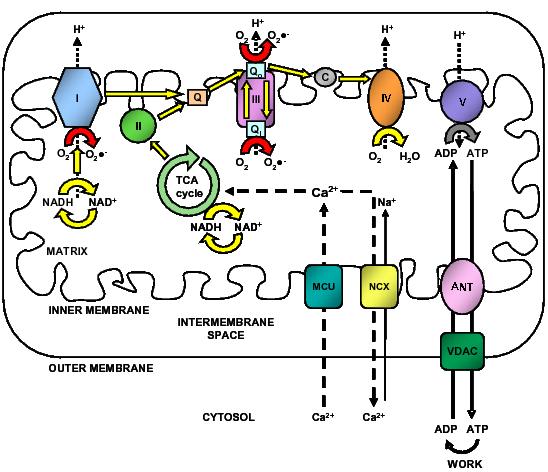
The mitochondria are the main source of oxygen free radicals in cells, which are very reactive and can harm cellular structures and DNA. Cells can repair typical levels of oxidative damage.
Notice that the mitochondria have an “outer” membrane and an “inner” membrane. In between is the intermembrane space. H+’s/protons get pumped out of the inner membrane into the intermembrane space. They then go through a protein (ATPase) to spin it into producing ATP.
A protein on the inner membrane of the mitochondria called Cytochrome C oxidase (unit IV – see pictures) is capable of absorbing light, which increases its activity or ability to pump H+’s, which leads to increased ATP production. This process of producing ATP is known as “oxidative phosphorylation.”
Research Snippets
-Cytochrome oxidase is an ideal target for cognitive enhancement, as its expression reflects the changes in metabolic capacity underlying higher-order brain functions. Brain photobiomodulation with LLLT is paralleled by pharmacological effects of low-dose USP methylene blue, a non-photic electron donor with the ability to stimulate cytochrome oxidase activity, redox, and free radical processes. Both interventions provide neuroprotection and cognitive enhancement by facilitating mitochondrial respiration, with hormetic dose-response effects and brain region activational specificity.
-We found that at low fluences (0.3–3Jcm2) mitochondrial respiration was stimulated, as shown by the increase in adenosine triphosphate (ATP), Ca2+, and mitochondrial membrane potential. This, in turn, generated low amounts of reactive oxygen species (ROS) and nitric oxide (NO) that activated signaling pathways and gene transcription without causing cytotoxicity