Researchers asked if one diet could be crowned best in terms of health outcomes. If diet is a set of rigid principles, the answer is a decisive no. In terms of broader guidelines, it's a decisive yes.

That notion is at once relatable and tragic, in that diet is inextricable from the amount of healthy time we spend on Earth. Improvements in diet are clearly associated with significant lengthening of lifespan and dramatic decreases in risk of most chronic diseases. Combining disease and longevity into the concept of healthspan, the number of healthy years of life—fundamentally more important but less readily quantifiable than lifespan—the data in favor of optimizing our diets are even more compelling. No one is arguing that diet is less than extremely important to health and well-being, but seemingly everyone is arguing as to what constitutes the best diet.
The voices that carry the farthest over the sea of diet recommendations are those of iconoclasts—those who promise the most for the least, and do so with certainty. Amid the clamor, Dr. David Katz is emerging as an iconoclast on the side of reason. At least, that’s how he describes himself. From his throne at Yale University's Prevention Research Center, where he is a practicing physician and researcher, said sea of popular diet media is the institution against which he rebels. It’s not that nutrition science is corrupt, just that the empty promises of memetic, of-the-moment diet crazes are themselves junk food. To Katz they are more than annoying and confusing; they are dangerous injustice.
Scientific publisher Annual Reviews asked Katz to compare the medical evidence for and against every mainstream diet. He says they came to him because of his penchant for dispassionate appraisals. "I don't have a dog in the fight," he told me. “I don’t care which diet is best. I care about the truth."
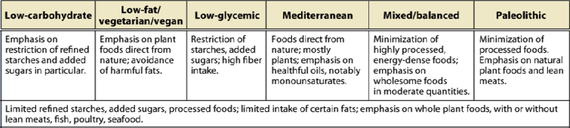
They also found carbohydrate-selective diets to be better than categorically low-carbohydrate diets, in that incorporating whole grains is associated with lower risks for cancers and better control of body weight. Attention to glycemic load and index is "sensible at the least." Eating foods that have high glycemic loads (which Katz says is much more relevant to health outcomes than glycemic index—in that some quality foods like carrots have very high indices, which could be misleading) is associated with greater risk of heart disease.
Finally, in a notable blow to some interpretations of the Paleo diet, Katz and Meller wrote, "if Paleolithic eating is loosely interpreted to mean a diet based mostly on meat, no meaningful interpretation of health effects is possible." They note that the composition of most meat in today's food supply is not similar to that of mammoth meat, and that most plants available during the Stone Age are today extinct. (Though it wouldn't surprise me to learn that Paleo extremists are crowd-funding a Jurassic Park style experiment to bring them back.)
"The evidence that with knowledge already at our disposal, we could eliminate 80 percent of chronic disease is the basis for everything I do," Katz said. Just as he was finishing his residency in internal medicine in 1993, influential research in the Journal of the American Medical Association ("Actual Causes of Death in the United States") put diet on a short list of the lifestyle factors blamed for half of deaths in 1990. "Here we are more than 20 years later and we’ve made just about no progress."
A nod to the fact that popular media is not totally lost, Katz borrows from the writer Michael Pollan, citing a seminal 2007 New York Times Magazine article on "nutritionism" in concluding that the mantra, "Eat food, not too much, mostly plants" is sound. "That’s an excellent idea, and yet somehow it turns out to be extremely radical."
The current review is in pursuit of that, as is a system for determining the nutritional value of foods that Katz recently spent two years developing. It's called NuVal, and it offers consumers a single numeric value to determine foods' worth, as opposed to a complex nutritional panel. The number does things like differentiate intrinsic from added nutrients. "If you don’t do that, the best thing in the whole damn food supply is Total cereal. Total is basically a completely vapid flake delivery system for multivitamins. You could skip the cereal and take the multivitamin."
"If you eat food direct from nature," Katz added, "you don’t even need to think about this. You don't have to worry about trans fat or saturated fat or salt—most of our salt comes from processed food, not the salt shaker. If you focus on real food, nutrients tend to take care of themselves."
The ultimate point of this diet review, which is framed like a tournament, is that there is no winner. More than that, antagonistic talk in pursuit of marketing a certain diet, emphasizing mutual exclusivity—similar to arguments against bipartisan political rhetoric—is damaging to the entire system and conversation. Exaggerated emphasis on a single nutrient or food is inadvisable. The result, Katz and Meller write, is a mire of perpetual confusion and doubt. Public health could benefit on a grand scale from a unified front in health media: Endorsement of the basic theme of what we do know to be healthful eating and candid acknowledgement of the many details we do not know.
"I think Bertrand Russell nailed it," Katz told me, "when he said that the whole problem with the world is that fools and fanatics are so sure, and wise people always have doubts. Something like that."
Read more

No comments:
Post a Comment